
Black Spots in Nails: Causes, When to Worry, and What to Do
Have you ever had black spots or streaks show up in your nails? If so, it was probably hard to not freak out. Black spots in nails are usually caused by minor trauma or trapped blood under the nail and will grow out over time. In rare cases, certain patterns may need medical evaluation.
In this article you’ll learn in more detail:
- What are the black spots?
- What causes them?
- Are they reversible?
- Are you going to die? (Just kidding. You’ll be fine.)
Black Spots In Nails: A Reader Question
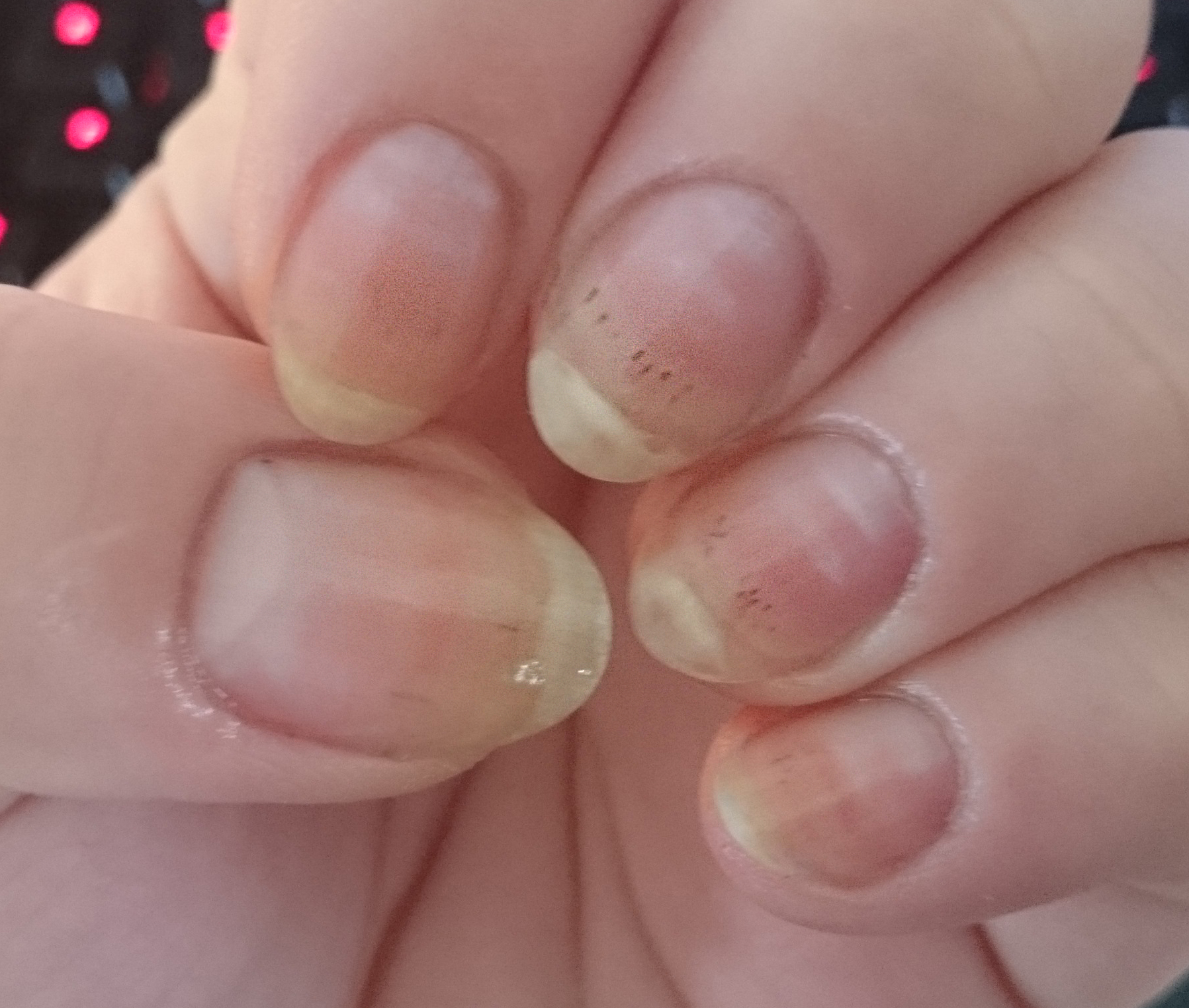
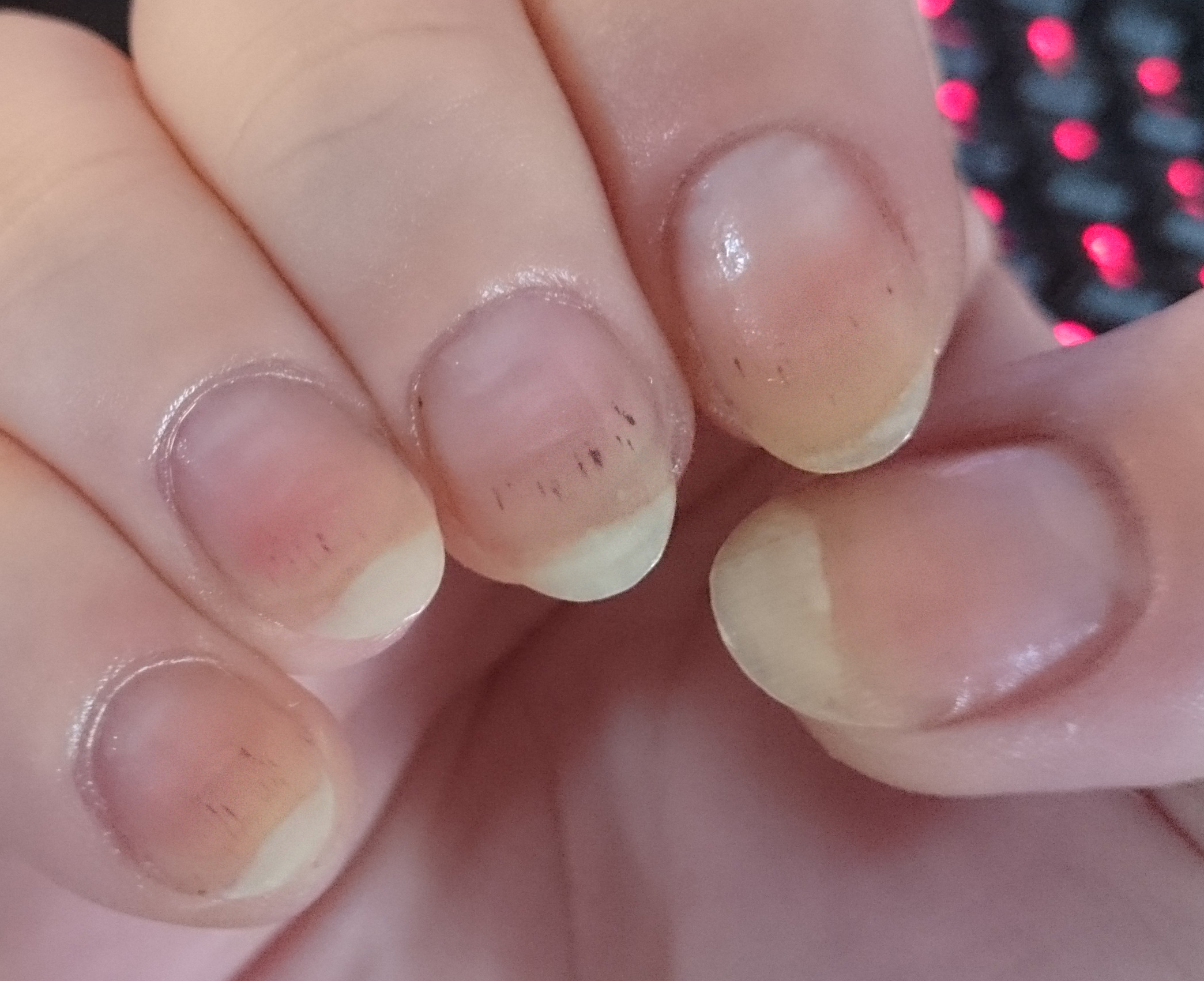
Hi, Ana! So you’ve talked about white spots on nails. What about black spots that look like “specks”? I’ve got them on a lot of my nails, and I have no idea what caused them. Thank you! ~Jenny
The Answer: Splinter Hemorrhages
I sent Jenny’s photos to my mentor, Doug Schoon, author of Nail Structure and Product Chemistry, to make sure my answer was correct.
It looks like splinter hemorrhages. They’re pretty common and are usually caused by abuse to the nail. They are caused by blood leaking from the capillaries of the nail bed. In the salon, they are often caused by over-filing and improper product removal.
What Causes Them
When damage occurs in the pink nail bed, a small amount of blood can ooze out.
Since the blood is trapped under the nail plate, a small red spot forms. Tiny clots develop when the bleeding stops.
The iron in our blood gives the clot its red or brown color.
Since the nail plate grows out in linear grooves—think ridges—the blood clot can take on a straight shape, looking like a wooden splinter is under your nail.
Like Doug said above, these are typically caused by hard impact or other damage to the nail bed including over-filing and improper product removal at the salon.
In the overwhelming majority of cases, splinter hemorrhages are not due to any serious underlying systemic disorder or any skin disorder of the nail unit. Therefore in most situations, as the nail grows out, since the splinter hemorrhage is deposited on the under surface of the nail plate, it will grow out with the nail and the nail bed over a period of time and consequently disappear completely. This usually happens in a period of a few months.
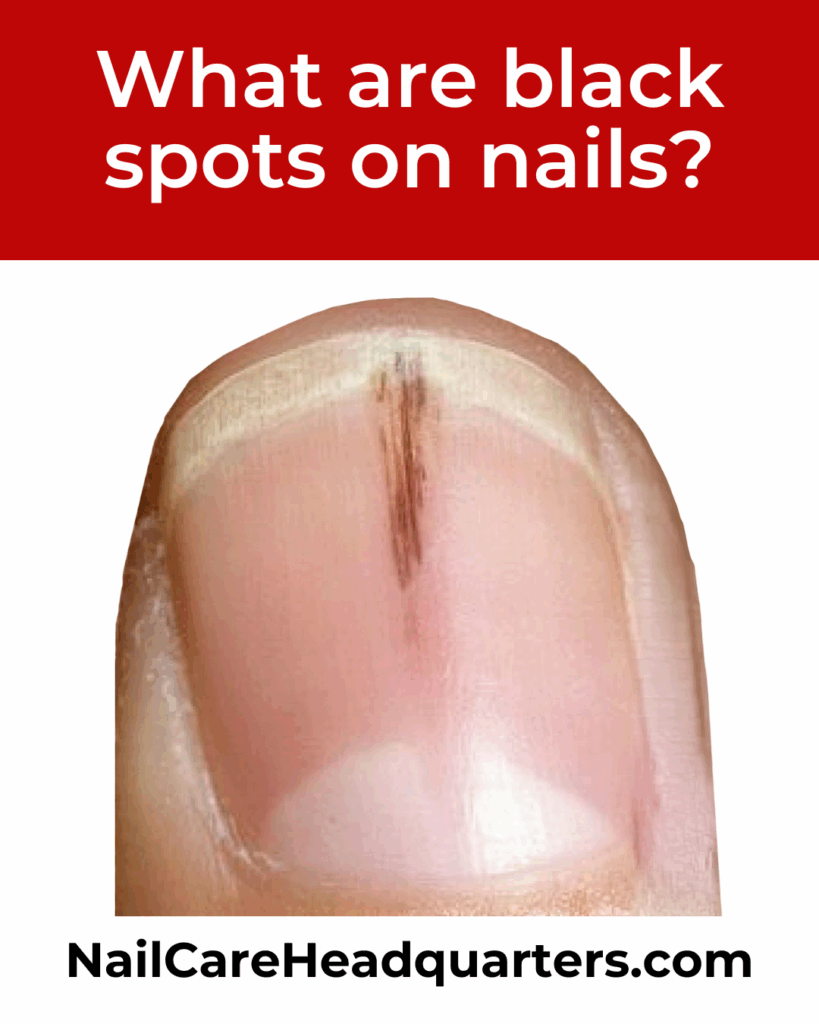
Close-up of fingernail showing dark splinter hemorrhage streak – black spots in nails
When To Worry: Nail Psoriasis
If the hemorrhages appear on several nails rather than just one, it’s worth considering psoriasis of the nail plate. Most people are familiar with skin psoriasis, but it can affect the nails too.
In this condition, there is a thinning of the upper layer of the nail bed (epidermis) and therefore the small blood vessels are not as deep down within the tissue of the nail bed, so splinter hemorrhages are easier to develop. Therefore they occur frequently in patients who have nail psoriasis.
How to Be Smart and Safe Online
Since I’m not a doctor, I usually don’t like to present medical issues that could be causing problems in the nail plate in my articles.
Use caution when searching online and using AI like ChatGPT.
There are too many articles online that try to scare the stuff out of you. These articles are a hypochondriacs playground. Most of the time, they are completely false.
Unfortunately, AI has trained itself on the entire internet. It will deliver false information to you because it wants to make you happy.
It’s NOT a good idea to try and self diagnose based on a fake internet article or an AI chat thread that provides false information.
If a website has the keywords in the url address, please don’t waste your time clicking or reading. For example; when searching for “nail fungus,” one of the results Google delivers is www.nailfungusreport.org. The website’s sole objective is to sell advertising or a bogus product on their site.
If using AI, ask it for the sources it uses. You want it to pull from reputable websites so you know you are getting high quality information.
I have found WebMD.com and MayoClinic.com to be reputable sources. Surprisingly, so is NailsMag.com. They are the premier magazine for nail professionals. They have many articles that provide additional information which nail professionals don’t usually learn in school. Doug Schoon also contributes to Nails Magazine.
Do Black Spots in Nails Go Away?
There is no way to make them go away faster. As I cover in my White Spots In Nails article, these things simply need to grow out. The fingernail plate takes about 4–6 months to completely replace itself.
Watch the spot as the nail grows. If it keeps getting wider, longer, or appears to creep back toward the cuticle line, see a dermatologist. Nail plate issues tend to develop slowly, so a few weeks’ wait for an appointment is fine.
The Bottom Line
Most black spots in nails are caused by minor trauma and will grow out with the nail. The key is watching how the spot behaves — if it moves toward the tip over time, it’s almost certainly harmless. If it doesn’t move, spreads, or changes appearance, get it checked.
You’re going to be ok.
What To Do Next
- Monitor the spot over the next few weeks
- Take a photo now so you can track movement/nail growth over time
- Keep nails hydrated with a high-quality jojoba-based nail and cuticle oil
- See a professional if the spot doesn’t grow out
If you want to improve your overall nail health, start with The Ultimate Nail Care Routine.
0 Comments